 The Bitcoin Annotated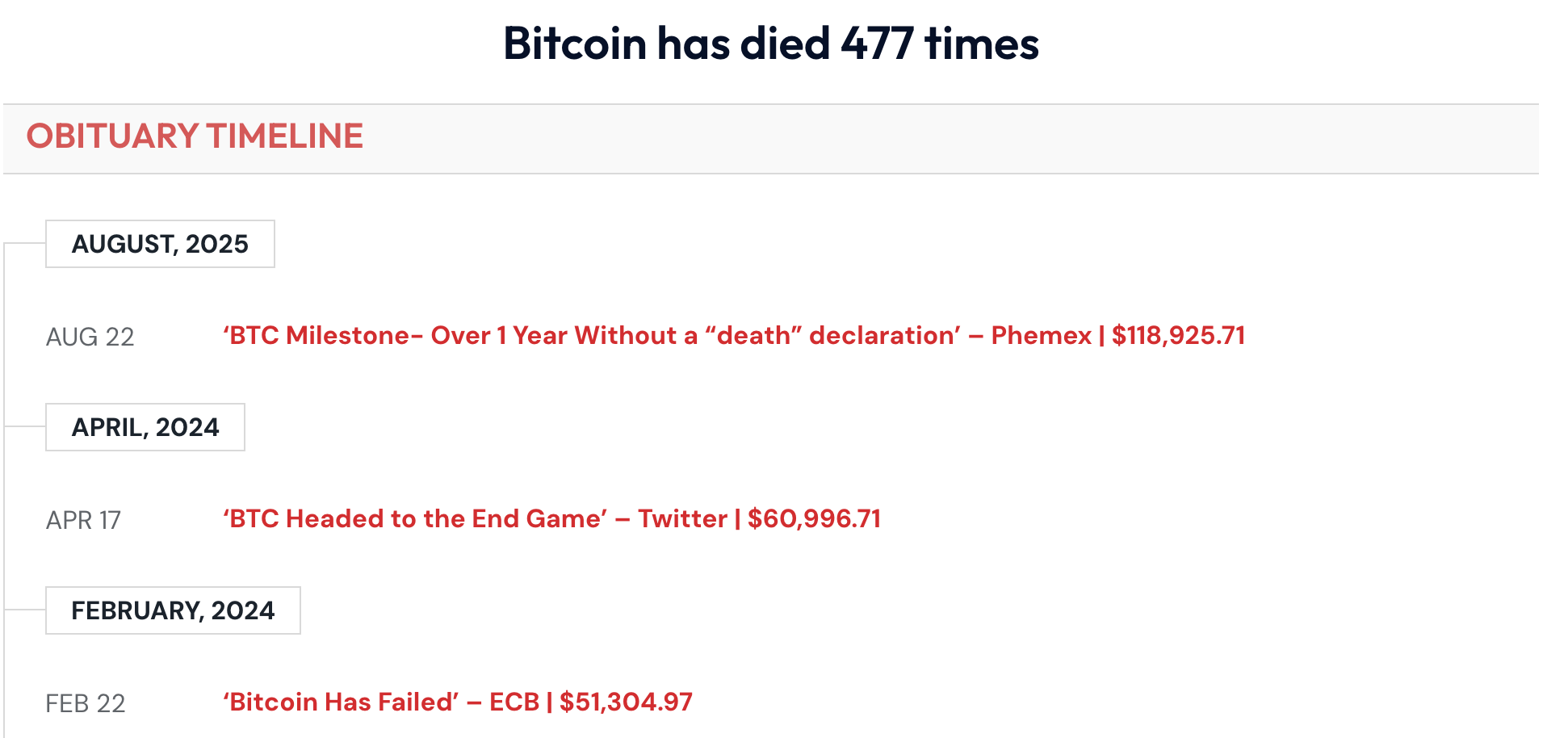
On December 15, 2010, a small economics blog called The Underground Economist published an essay titled Why Bitcoin can’t be a currency. The argument was straightforward: a fixed supply meant deflationary pressure, deflationary pressure meant nobody would spend, nobody spending meant no currency. Bitcoin was trading at twenty-three cents at the time. The post is dated, technical, and reasonable. It was also the first.
The genre of the bitcoin obituary now spans fifteen years and 477 entries. The tracker on 99bitcoins.com, maintained continuously since 2014 by Ofir Beigel and his team, catalogs each declaration with author, publication, date, and the bitcoin price on the day of writing. Forbes wrote one in June 2011, after the first major Mt. Gox hack. Wired wrote a long-form one in November 2011, when the price collapsed from thirty dollars to two. Paul Krugman has written several, Peter Schiff more. Nouriel Roubini has been declaring bitcoin’s death continuously for over a decade.
The obituaries follow patterns. A drawdown brings them; a regulatory hearing brings them; a hack brings them; a public spat with a Nobel laureate brings them. The peak year was 2017, when 125 separate obituaries were published during the run that took bitcoin to twenty thousand dollars and back down to three thousand. The crypto winter of 2018 produced over ninety. The FTX collapse in 2022 produced a brief surge that quickly tapered. By 2024 the count was in single digits.
In 2025, for the first time since the genre began, no major publication wrote a bitcoin obituary. The chart Jameson Lopp published on the milestone, fifteen years of declining-then-vanishing death notices, is the obituary genre’s own death certificate.
The first obituary was wrong about the future. So were all that followed. The obituaries became part of bitcoin’s culture, the negative space that makes the shape visible.