 The Bitcoin Annotated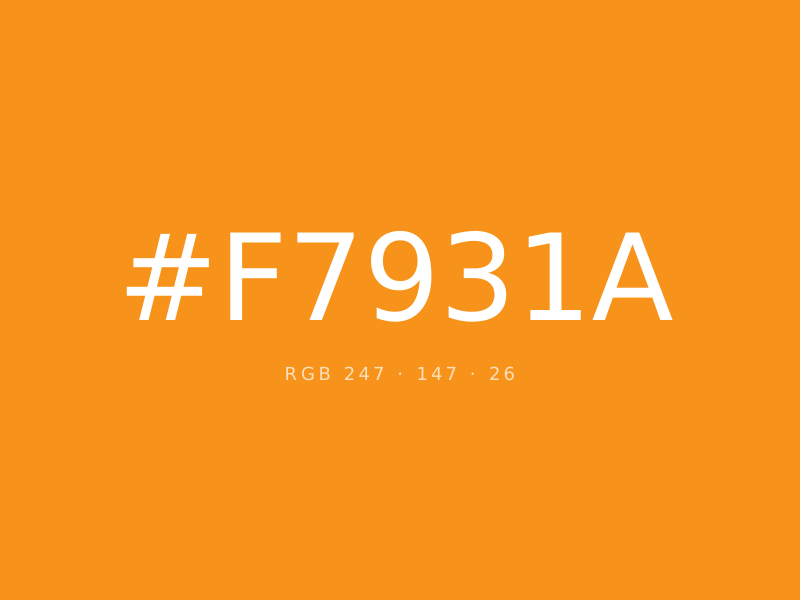
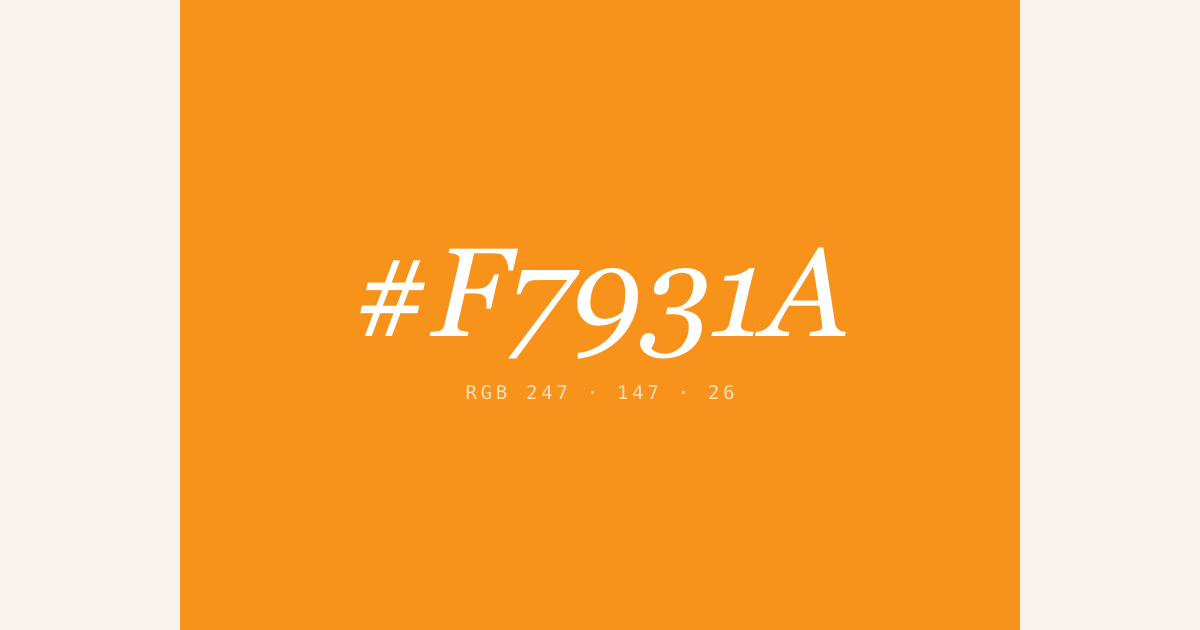
Bitcoin orange (hexadecimal color code F7931A, a saturated, slightly amber shade roughly midway between traffic-cone and Halloween-pumpkin) has no formal status as the asset’s official color. There is no Bitcoin Foundation that selected it. There is no style guide that mandates it. There is, in the strict sense, nobody at all whose authority would compel any particular bitcoin product, exchange, hardware wallet, T-shirt, or sticker to use the color rather than some other color. And yet, with rare exceptions, every bitcoin product, exchange, hardware wallet, T-shirt, and sticker uses the color. The convergence is the artifact.
The color’s earliest documented appearance is on a logo design posted to the BitcoinTalk forum on November 1, 2010, by a user with the handle bitboy. Earlier that year, on February 24, 2010, Satoshi Nakamoto had himself proposed a revised gold-coin logo with the two-stroke B that would, seven years later, be inducted into Unicode at code point U+20BF, but Satoshi’s design was still rendered in gold against a coin-like background. Bitboy’s November contribution was the structural change: he kept Satoshi’s two-stroke B, rendered it in white, tilted it fourteen degrees to the right, and placed it on a flat orange field. The orange he chose was hex code #F7931A. The thread in which he posted the design has not been substantively revisited since. Bitboy’s identity remains unknown. He acknowledged in the thread that the Mastercard logo had been a deliberate visual influence.
Why orange, of all the colors. The most plausible answer, advanced by several members of that original BitcoinTalk discussion, is that the color signaled energy, warmth, and a sense of value without invoking the conventional color palette of established financial brands. Most banks were blue. The credit card networks were blue, red, or some combination. The American dollar was green. The euro was a kind of institutional teal. Orange was unclaimed, hot, optimistic, and slightly out-of-system in a way that suited the asset’s positioning. There was no committee. There was no brand consultancy. There was a small group of people on a forum, in early 2010, agreeing that orange looked right.
The color has accumulated, in the years since, a kind of devotional weight. The bitcoin community refers to it familiarly as orange, the definite article performing the work that the chain performs in protocol discussions. The verb to orange-pill, denoting the conversion of a non-bitcoiner into a bitcoiner through patient education, takes the color as its root. The phrase orange coin good, half-ironic and half-sincere, has become a community shibboleth. Laser eyes, the 2021 profile-picture campaign that pushed the price toward six figures, would not have been recognizable as bitcoin-coded without the orange that surrounded the eyes. The hardware wallet manufacturer Coldcard prints its branding, and its tamper-evident bag numbers, in orange. The Bitcoin Magazine cover, the Bitcoin 2021 Miami stage, the Bitcoin 2024 Nashville stage, the El Salvador Bitcoin Office’s logo: orange. Once one starts cataloging the convention, it becomes difficult to find a bitcoin-aligned product that breaks it.
What makes the color a cultural artifact rather than just a design choice is its persistence in the absence of any authority that could enforce it. No one was ever required to use F7931A. The color won its position the way bitcoin itself has won most of its positions — through voluntary, distributed, undirected adoption by people who individually decided that the existing alternatives were less satisfactory. It is, in that sense, the asset’s most consistent self-portrait. The protocol does not have a logo. The protocol has a color. The two have, for fifteen years, been treated as the same thing.