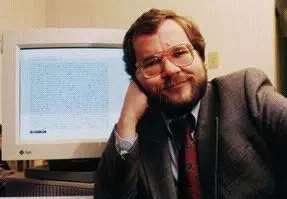
On June 5, 1991, Phil Zimmermann posted a program called Pretty Good Privacy to a network of political activists called Peacenet. The program let an ordinary person encrypt an email so well that no government in the world could read it. Zimmermann distributed it for free, with source code, and within hours of release it had spread overseas via the early internet. He had not anticipated this, or had only half-anticipated it. He had been working on the program for several years, motivated by a draft Senate bill that would have required cryptographic systems to include government back doors. He released it when he did because he believed the bill was about to pass.
The bill did not pass. The release went out anyway. Within months, the U.S. Customs Service opened a criminal investigation. The charge under consideration was violation of the Arms Export Control Act — the same statute that governed the international shipment of munitions. Cryptographic software with sufficient key length was, in 1991, classified by the U.S. government as a weapon. The investigation lasted three years. Zimmermann faced potential prison time and a million-dollar fine. He did not have the resources to mount a defense at that scale, and for a long stretch of the early 1990s the case was the most visible test of whether the government could control civilian access to strong cryptography.
The resolution, when it came, was through a stunt. In 1995, Zimmermann arranged with MIT Press to publish the complete PGP source code as a 907-page book. He then applied for an export license. The government had a problem. Books are protected speech. By tradition, by precedent, and by the First Amendment, the United States cannot stop a book from leaving the country. But the source code in the book was the same source code the government was prosecuting Zimmermann for distributing electronically. To approve the book was to admit the prosecution was indefensible. To deny the book was to ban a book. In early 1996, the investigation was dropped without indictment.
The PGP episode established several things that bitcoin would later inherit. It established that ordinary people could possess cryptographic tools previously available only to states. It established that source code is speech. It established that an open-source release, once made, cannot be recalled — the network of people who downloaded the program in the first hours had carried it everywhere, and no government action could put it back. It established the precedent for distributing dangerous software as a fait accompli, then defending it from already-established positions. Satoshi did not cite Zimmermann in the whitepaper, but the whitepaper assumes Zimmermann’s victory as background. By the time bitcoin was released seventeen years later, the legal question of whether civilians could run strong cryptography on their own machines had been settled — by Zimmermann, with help from MIT Press.
PGP itself remains in use, in modernized forms, three and a half decades after release. The original release predates the World Wide Web. It predates Linux. It predates the public internet as most people now think of it. Zimmermann gave it away. The catalog includes PGP not as a bitcoin precursor in the technical sense — bitcoin uses different cryptographic primitives — but as the cultural and legal precondition. The right to run unbreakable cryptography on a personal computer was won by a peace activist in Colorado, on the back of a 907-page book.