Mt. Gox began life in 2007 as a side project: a website where players of the collectible card game Magic: The Gathering could trade cards online. The name was an acronym — Magic: The Gathering Online eXchange. The card-trading site never amounted to much. In July 2010, its owner, an American programmer named Jed McCaleb, repurposed the dormant domain to launch a bitcoin exchange. Within nine months, the site was handling the majority of global bitcoin trading volume. In March 2011, McCaleb sold the operation to a French software developer living in Tokyo named Mark Karpelès. Three months later, on June 19, 2011, the wheels came off in public.
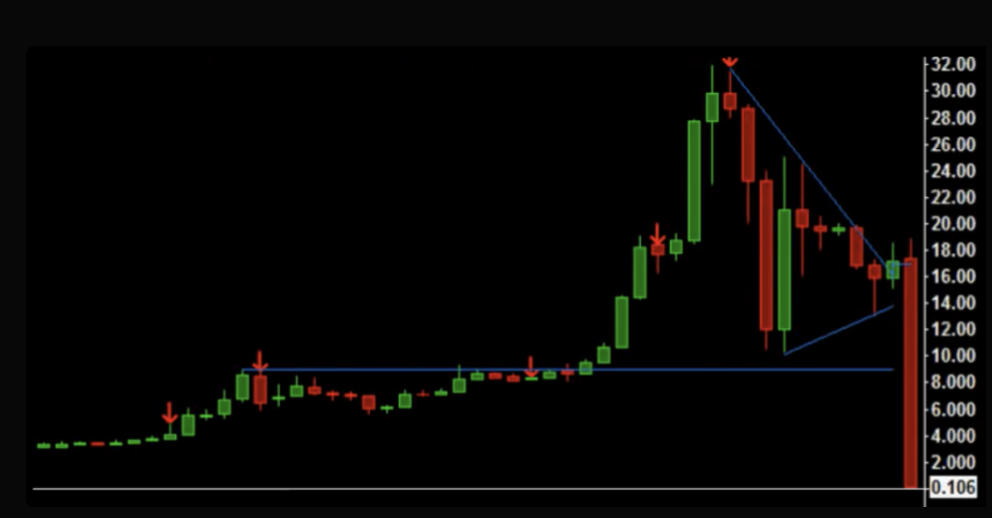
The first sign of trouble came two days earlier. On June 17, an anonymous user calling themselves cRazIeStinGeR posted to Pastebin offering to sell a copy of the Mt. Gox user database. Karpelès denied the breach. Then, on the night of June 19 — three in the morning Tokyo time — an attacker accessed an administrator account that had been left active on a former auditor’s computer. The attacker began executing trades. The largest single transaction observed was a sale of 261,383.7630 bitcoin at one cent each, executed at 17:51:16 UTC. The price on Mt. Gox flash-crashed from $17.50 to one penny in minutes.
The mechanics were unsubtle. The attacker was attempting to sell vast quantities of stolen bitcoin into the market and then withdraw the resulting cash. What saved the exchange from total drain was an account-level cap on daily withdrawals — set, almost incidentally, at one thousand dollars. The attacker successfully extracted approximately two thousand bitcoin before the cap throttled them. A separate user known only as Kevin purchased 259,684 bitcoin during the crash for roughly three thousand dollars but managed to withdraw only 643 of them before Karpelès suspended the site.
Karpelès rolled back the trades to their pre-crash state and took the exchange offline. It would not return to operation until August. The total exposure was estimated at approximately $8.75 million in bitcoin equivalent, affecting around nine hundred user accounts. Karpelès, in subsequent communications, described the situation as contained.
It was not contained. Subsequent forensic analysis by the security firm WizSec, conducted after the exchange’s eventual collapse, would establish that systematic theft of customer bitcoin from Mt. Gox’s hot wallet had begun in late 2011 and continued, undetected, for years. The June 2011 incident is best understood as the public version of a security culture that was already broken and would remain broken until the entire exchange went into bankruptcy in February 2014, with approximately 850,000 bitcoin missing.
The artifact endures because it was the first time bitcoin’s central trade-off — not your keys, not your coins — was demonstrated at scale, in public, with real losses. Every subsequent exchange failure, from QuadrigaCX to FTX, has been a variation on the lesson Mt. Gox taught for the first time on a summer night in 2011: a custodian is a single point of failure, and the convenience of letting someone else hold your keys is exactly the cost of letting someone else lose them.