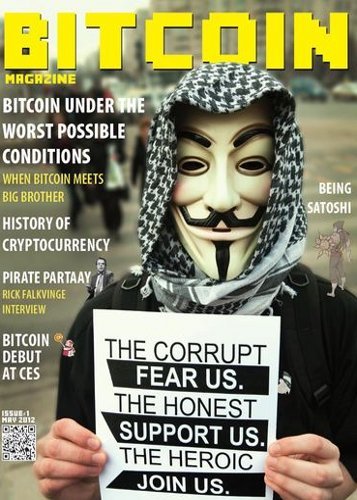
In late 2011, an eighteen-year-old computer science student at the University of Waterloo named Vitalik Buterin was writing about bitcoin for a small blog. He could not afford to buy bitcoin and did not have the equipment to mine it, so he had taken a job that paid him five bitcoin per article. A Romanian entrepreneur named Mihai Alisie noticed the writing and proposed a magazine. The first issue was printed in May 2012, distributed by mail to subscribers worldwide and stocked at Barnes and Noble. It was the first publication dedicated exclusively to bitcoin.
The early masthead is now historically odd. Buterin was head writer; he would write for the magazine for roughly two years before leaving in 2013 to develop Ethereum, the project he is now identified with. Alisie was Editor in Chief from December 2012 to April 2014, after which he too departed for Ethereum, where he served as Chief Innovation Officer. The magazine they had founded as a bitcoin-only publication was, in its first eighteen months, run almost entirely by people who would shortly leave bitcoin for an adjacent project. The catalog notes this without commentary; it is part of the historical record that bitcoins first dedicated journalism was produced by people who would not stay.
What they produced, however, was substantive — and, on first impression, more politically charged than the current bitcoin discourse remembers. The first issue cover, May 2012, was a photograph of a protester in a Guy Fawkes mask holding a sign reading The corrupt fear us. The honest support us. The heroic join us. Bitcoin in 2012 was not yet the asset class of corporate treasuries and ETF inflows; it was a tool of the Anonymous-adjacent post-Occupy left-libertarian fringe, and the magazine staked its position accordingly. The early issues read as serious magazine work — reported feature pieces, technical explainers, interviews with developers and merchants. Buterin wrote multi-part series on mining pools, double-spends, market dynamics, and 51% attacks at a level that no other publication was attempting. The print circulation was small but the readership was concentrated; in the 2012-2014 period, the magazine was effectively where bitcoiners learned what was happening in their own world. The model was novelty, in retrospect — a print magazine for an internet-native phenomenon — but the work survives.
In late 2014, the magazine was acquired by Coin Publishing LLC, which became BTC Media, which became BTC Inc, headquartered in Nashville, Tennessee under David and Calli Bailey. Under BTC Inc the magazine shifted toward digital-first publishing and toward producing the Bitcoin conference series — annual events that grew through the late 2010s and have, since 2021, become the largest bitcoin gatherings in the world. The 2024 conference in Nashville was the venue at which Donald Trump, then a presidential candidate, addressed the bitcoin community directly. The magazine that started in a Romanian apartment as a side project of a teenage university student is now the cultural and commercial center of the Bitcoin conference industry.
The magazine itself is still publishing. The print edition is now mailed quarterly under the BTC Inc imprint, alongside a continuously updated website that functions as the de facto wire service of the bitcoin world. Whether any of this would have happened without the May 2012 first issue is unclear. What is clear is that for a long stretch of the early 2010s, when bitcoin had no professional press of its own, two people who had not yet found their later careers were writing it down.
The catalog includes Bitcoin Magazine because it is the longest-running bitcoin publication in existence and because its founding is structurally significant: bitcoin acquired its first dedicated journalism four months before its first halving and one year after Satoshi disappeared. The protocol got a press while it was still small enough to know everyone in the press by name.