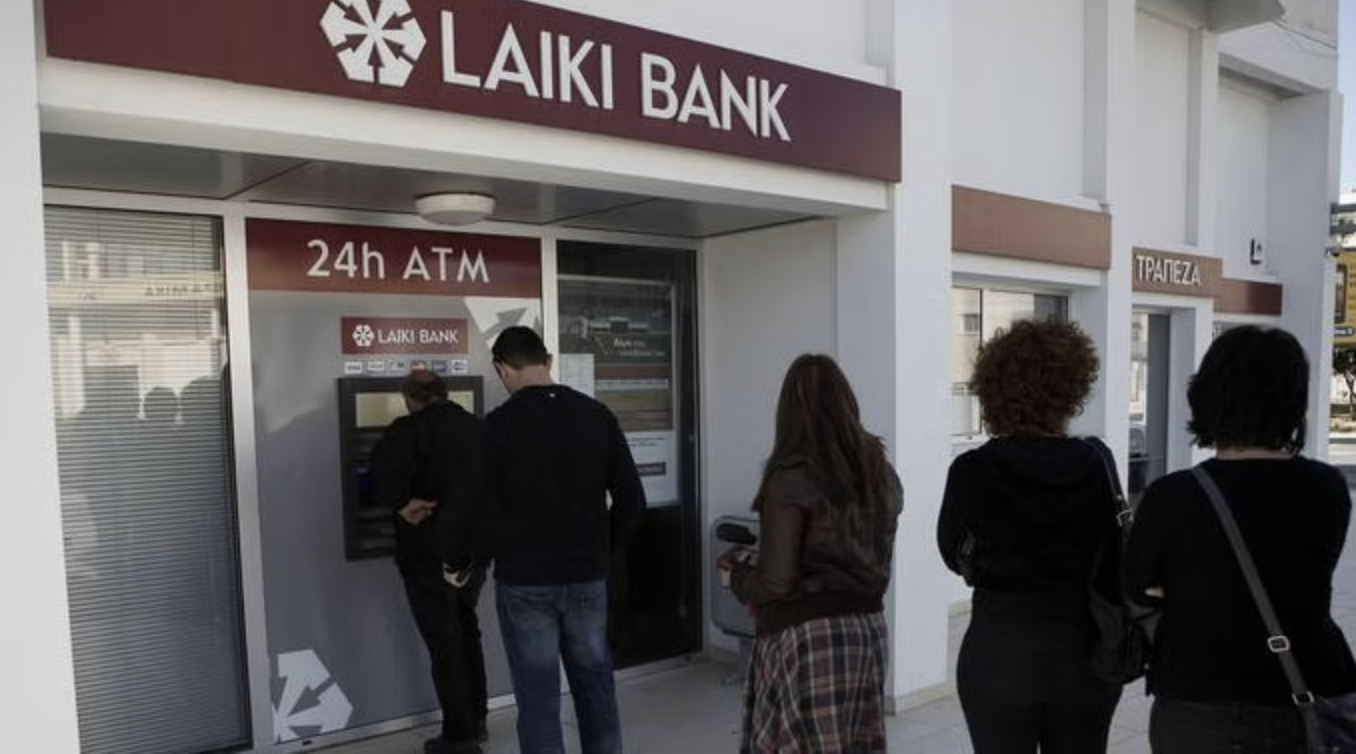
On the morning of Saturday, March 16, 2013, depositors in the Republic of Cyprus woke up to discover that their savings accounts had been frozen overnight as part of a €10 billion European Union bailout agreement. The terms, negotiated in the small hours by finance ministers in Brussels, called for a one-time levy on every deposit held in a Cypriot bank: 6.75 percent on amounts under €100,000, 9.9 percent on amounts above. The deposits would be debited automatically. Account holders had not been consulted. The banks remained closed.
The bailout mechanism was, technically, novel. The decision to apply the levy below the €100,000 deposit insurance threshold — the line the European Union had spent years promising would never be crossed — was widely understood as a test case. If it worked in Cyprus, it could work anywhere. Italian and Spanish savers, watching from neighboring countries with their own troubled banking sectors, drew the obvious conclusion. So did everyone else.
The Cypriot parliament voted the proposal down on Tuesday, March 19, in a unanimous rejection that included every member of the ruling party. A revised deal a week later spared smaller depositors but imposed steeper losses — eventually around 47 percent — on uninsured deposits at the country’s two largest banks, Bank of Cyprus and Laiki Bank. The banks reopened on March 28 under capital controls that limited daily withdrawals to €300. Those controls would remain in place, in some form, for two years.
Bitcoin had been trading around forty-five dollars on the Friday before the freeze. By the following Wednesday it had broken seventy. By the second week of April it had reached two hundred and sixty-six dollars. The price subsequently collapsed, as bitcoin prices in 2013 tended to do, but the moment had registered. The Wall Street Journal covered the rally. The Economist covered the rally. The phrase digital gold began appearing in mainstream financial press, often skeptically, frequently in scare quotes, but appearing nonetheless.
The cultural significance was larger than the price action. For four years, bitcoin had been an object of theoretical interest — a clever cryptographic system whose use case had never been clearly established outside of Silk Road. Cyprus provided the first widely visible answer to the question what is this for. The answer was: when the bank closes, you still have your bitcoin. The answer was not new — Satoshi had embedded a London Times headline about a banking bailout into the genesis block four years earlier — but Cyprus was the first time a non-bitcoiner could see the answer in real time, on the news, with their own deposits.
The lesson generalized poorly. Cyprus was a small island in a specific monetary union under specific political pressure. It was not, in the strict sense, a template for what would happen elsewhere. But the narrative was templatable, and the bitcoin community has reached for it consistently ever since — during the Greek crisis later in 2013, the Argentine peso collapses of 2018 and 2023, the Lebanese banking crisis of 2019, and the Russian sanctions of 2022. Each time, the reasoning runs: Cyprus, but here. The reasoning is sometimes correct and sometimes not. Either way, it traces directly to a Saturday morning in March 2013, when European depositors learned that their euros could be debited overnight, and a small but growing number of people decided to find out what bitcoin actually did.