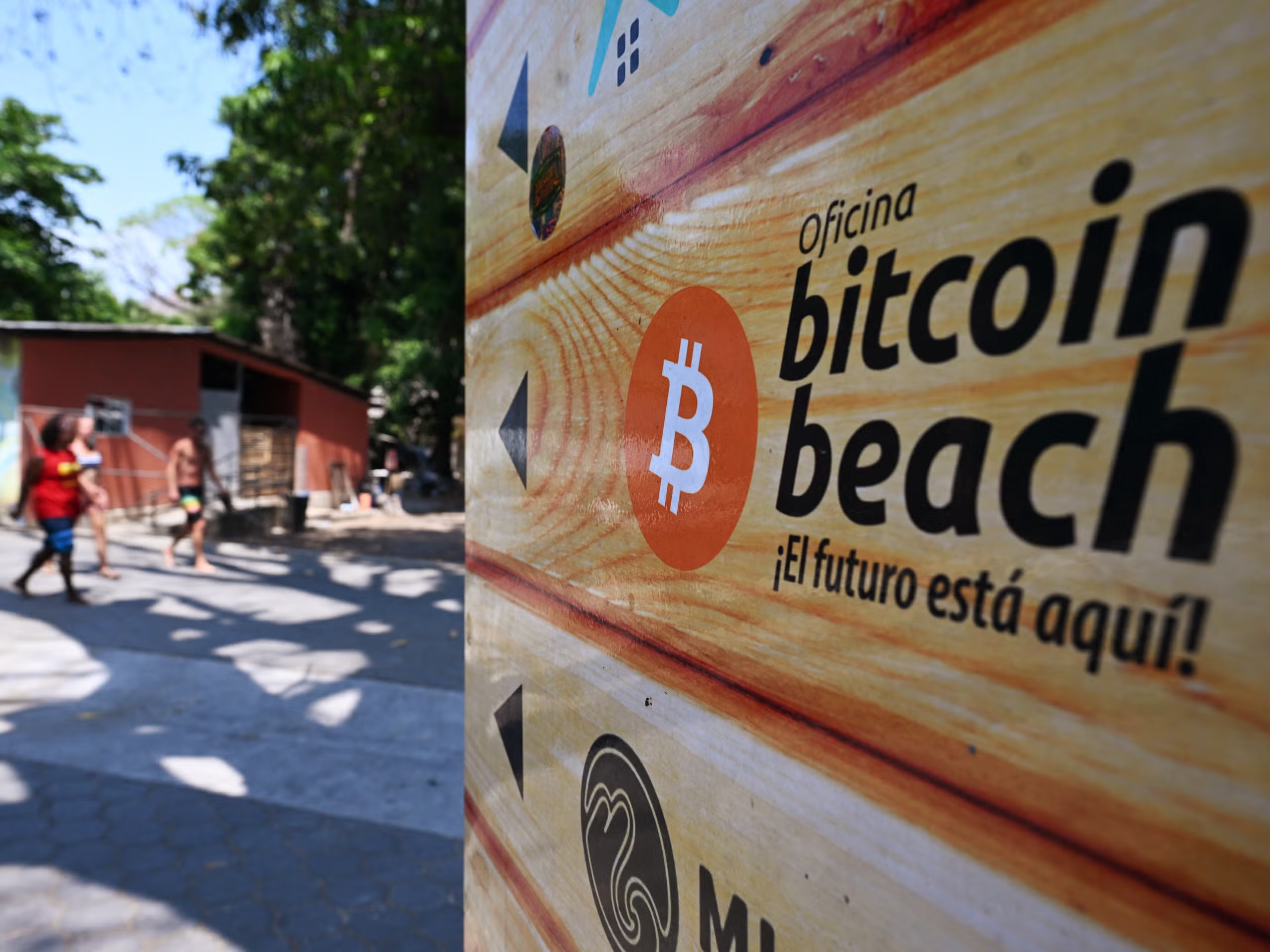
In the spring of 2019, an American expatriate named Mike Peterson, who had been living off-and-on in a fishing village called El Zonte on the Pacific coast of El Salvador since the mid-2000s, was approached by an intermediary representing an anonymous donor. The donor was an early bitcoin holder. The donor wanted to give a substantial sum to a community-development project, with one stipulation: the bitcoin could not be exchanged for dollars. It had to be used, on the ground, as bitcoin. Peterson, a former financial planner who had moved to El Zonte after a surfing trip and stayed to run a small charity, took the meeting and accepted the terms. The project that resulted came to be called Bitcoin Beach.
El Zonte at the time had approximately three thousand residents and no commercial bank. About seventy percent of the country was unbanked. Peterson and a local community leader named Roman Martínez began paying neighborhood youth in bitcoin for cleanup work, lifeguarding, tutoring, and small infrastructure projects. The bitcoin was held on Lightning-enabled mobile wallets — initially the Bitcoin Beach Wallet, later supplanted by Wallet of Satoshi and Strike — and could be spent at participating local businesses, who in turn could spend it at other participating businesses, who in turn spent it elsewhere. The result was something approximating a circular economy denominated in bitcoin, transacted over Lightning, in a village whose previous monetary infrastructure was cash and remittances.
The project survived its first significant test in March 2020, when the COVID-19 pandemic shut down the village’s tourism economy. Bitcoin Beach distributed bitcoin directly to families to keep food on the table, hired locals for community construction projects when the surf schools closed, and effectively functioned as a parallel social-safety net during a period when the formal one was unavailable. By late 2020 the project had attracted significant international attention. Bitcoin podcasters visited and reported on it. Jack Dorsey contributed bitcoin to the surf team. 60 Minutes would eventually film a segment at the same beach.
The political conversion arrived in mid-2021. President Nayib Bukele, who had been quietly observing Bitcoin Beach, met with Peterson and Strike’s CEO Jack Mallers, who had built much of the wallet infrastructure the project ran on. Within weeks of those meetings, Bukele announced from the stage of the Bitcoin 2021 conference in Miami that El Salvador would adopt bitcoin as legal tender. The Legislative Assembly passed the Bitcoin Law on June 8, 2021. It took effect in September. El Salvador became the first country in the world to recognize bitcoin as currency. The model the country was scaling was, in nearly every operational detail, the model that had been built and stress-tested in a village of three thousand surfers.
The cultural significance of Bitcoin Beach, distinct from anything that came after, is that it was the proof of concept the bitcoin maximalist case had been waiting for: a working circular economy, denominated in bitcoin, run by people who could not previously have accessed traditional finance. The argument that bitcoin was useful primarily as an asset, not a currency, had been the conventional wisdom of the institutional bitcoin world since approximately 2017. Bitcoin Beach was the counter-evidence. Its existence is the reason the next entry in this catalog could happen at all.