The first application to list a spot bitcoin exchange-traded fund in the United States was filed by Cameron and Tyler Winklevoss in July 2013. It was denied. So were the applications that followed, for ten years and approximately twenty filings, by SolidX, Bitwise, VanEck, Valkyrie, Wisdom Tree, ARK Invest, and several others. The Securities and Exchange Commission’s stated objections evolved over the decade — concerns about market manipulation, custody, surveillance-sharing arrangements, the depth of underlying spot markets — but the operational result was consistent. American investors who wanted exposure to bitcoin through a regulated investment vehicle would have to do so through products that held bitcoin futures rather than bitcoin itself, with the attendant tracking errors and roll costs that the structure entailed.
The dam broke, in retrospect, in August 2023, when a federal appeals court ruled in Grayscale v. SEC that the Commission’s denial of Grayscale’s spot ETF conversion had been arbitrary and capricious. The court did not order the Commission to approve any particular application. It did, however, foreclose the legal grounds on which the Commission had been denying them. The Commission, faced with the choice of either appealing the ruling, finding new grounds for denial, or simply approving the products it had spent a decade refusing, chose the third option. On January 10, 2024, the Commission issued a single order approving eleven spot bitcoin exchange-traded products simultaneously. They began trading the following morning. The chair of the Commission, Gary Gensler, issued an accompanying statement in which he made clear that the approval should not be read as an endorsement of bitcoin and that he, personally, remained skeptical. The approval, he explained, had been compelled by the court’s ruling. The signature was, in the only way that mattered, his.
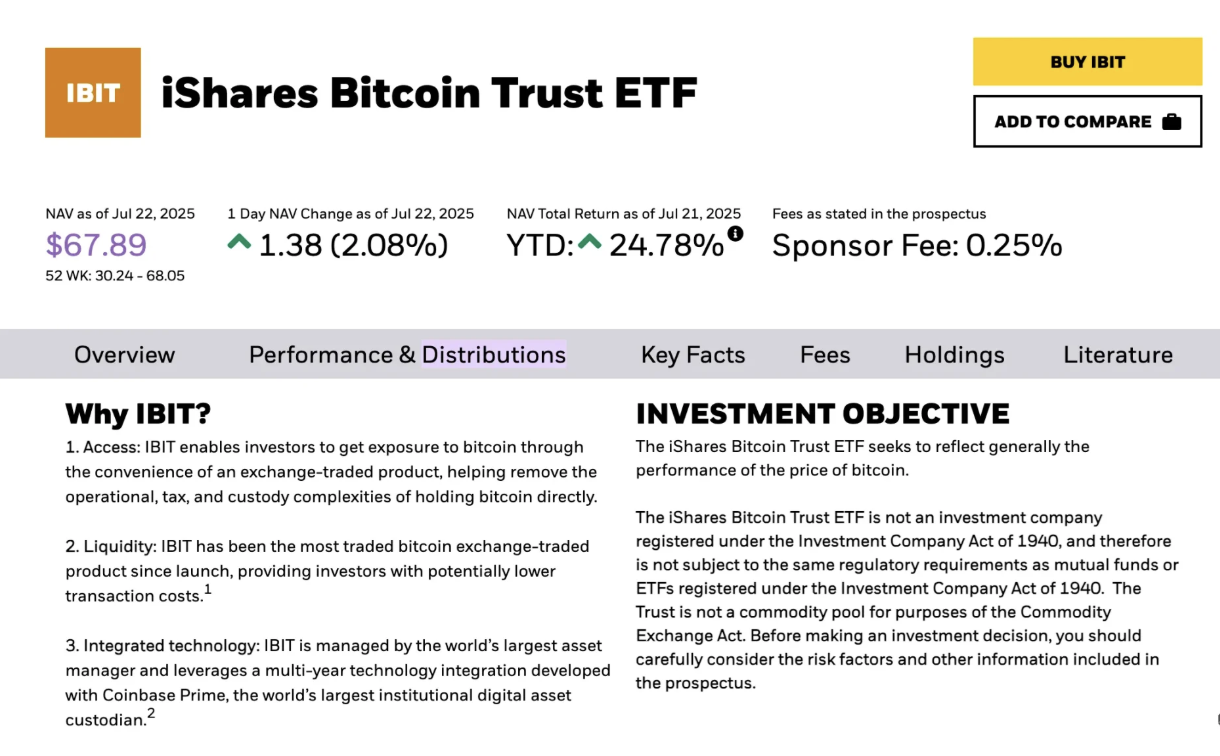
The market response was immediate and substantial. The eleven approved products — including BlackRock’s IBIT, Fidelity’s FBTC, ARK 21Shares’ ARKB, and Grayscale’s GBTC, which had converted from a closed-end trust on the day of approval — collectively traded approximately $4.6 billion in volume on their first day. By the end of the first week, IBIT alone had accumulated nearly $1 billion in assets under management. By the end of the first year, the eleven products held in aggregate over $110 billion. IBIT, by mid-2025, had become the fastest-growing exchange-traded fund in the history of the asset class measured by time to one hundred billion dollars in assets — a record that had previously been held, by a wide margin, by funds tracking the Standard & Poor’s 500.
The cultural significance was that bitcoin, after fifteen years of arguing about whether it ought to be allowed inside the American financial system, was now inside it. A retail investor with a 401(k) at any major American brokerage could, as of January 11, 2024, allocate a portion of their retirement savings to bitcoin without obtaining a separate wallet, custody arrangement, or exchange account. The asset’s volatility had not decreased. Its protocol had not changed. What had changed was that the question of access — which had been, for most of bitcoin’s history, the practical bottleneck on adoption — had been resolved. The bitcoin community received the approval with the muted satisfaction of a fifteen-year campaign won on technical grounds rather than on the merits.
The date of the approval, January 10, 2024, fell exactly fifteen years and one day after Hal Finney’s Running bitcoin tweet. The coincidence was widely noted. It was a coincidence. It was also, in the way that meaningful coincidences sometimes are, the kind of detail a sufficiently patient reader of the historical record might have predicted. The asset that had begun as a piece of software running on one man’s home computer was now, on the day of the anniversary, a regulated security available in every American retirement account. What it would mean for bitcoin to have arrived was, on the day of the approval, the question the next decade of cultural artifacts in this catalog would have to answer.