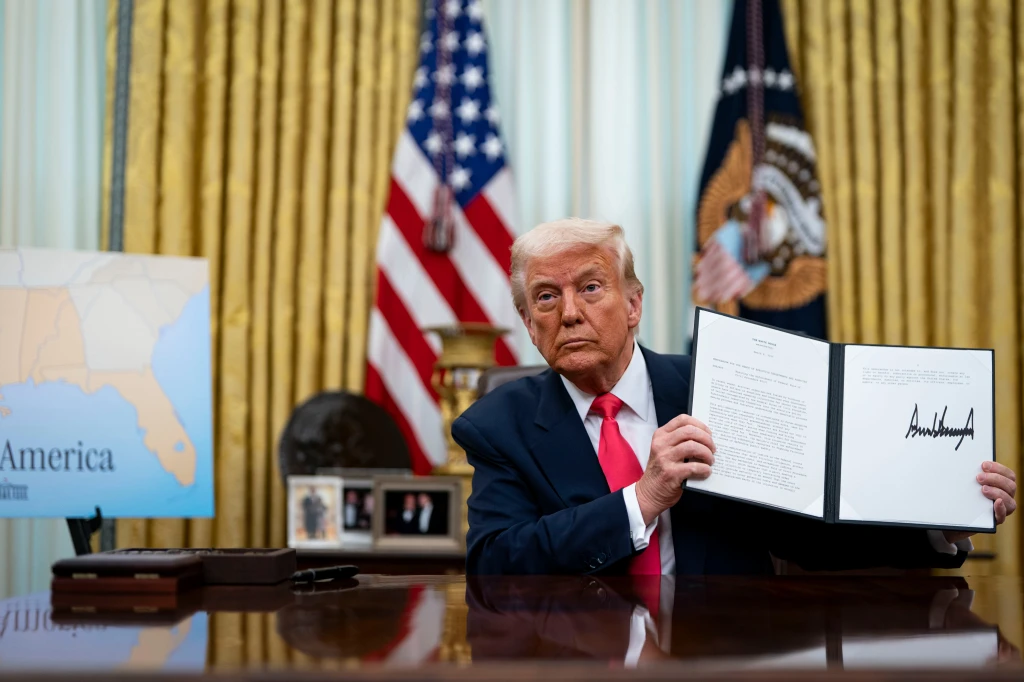
On Thursday, March 6, 2025, six weeks into his second term, President Donald J. Trump signed an Executive Order titled Establishment of the Strategic Bitcoin Reserve and United States Digital Asset Stockpile. The order’s central provision was straightforward and, as a matter of American monetary policy, unprecedented: the United States government would consolidate its existing bitcoin holdings — approximately 200,000 bitcoin acquired through criminal forfeitures, civil forfeitures, and tax-enforcement seizures conducted over the previous decade — into a permanent reserve. The reserve’s bitcoin would not be sold under any circumstances. It would be held in perpetuity, in the order’s language, as a national strategic asset.
The Executive Order’s secondary provisions were equally consequential and somewhat more operationally complex. The order established a separate Digital Asset Stockpile for non-bitcoin cryptocurrencies seized through enforcement actions, with substantially weaker holding commitments — those assets could be sold over time at the Treasury’s discretion. The order directed the Secretaries of Treasury and Commerce to develop budget-neutral strategies for acquiring additional bitcoin for the Reserve, language that the bitcoin community read as authorization for the government to actively grow its position through mechanisms that would not require new appropriations. The order did not specify a target size. Senator Cynthia Lummis’s BITCOIN Act, introduced in 2024 and reintroduced in March 2025, would have established a target of one million bitcoin acquired over five years. Whether that target would be adopted, modified, or quietly abandoned was, as of mid-2025, an open question.
The market response to the Executive Order was, by the standards of bitcoin’s regulatory history, unexpectedly muted. The price of bitcoin on the day of the signing was approximately $87,000. It rose modestly in the hours after the announcement, then fell when traders parsed the order’s specific language and noticed that the budget-neutral language did not commit the government to active purchases. By the end of the trading week, bitcoin was trading below where it had opened on March 6. The bitcoin community’s reaction was, in many cases, similarly mixed. The maxi-aligned wing celebrated the Executive Order as the most significant government endorsement bitcoin had ever received and as a structural confirmation of the asset’s monetary case. A skeptical minority argued that the order’s actual policy commitments were narrow — the United States had committed only to not selling assets it already held — and that the dramatic framing exceeded the substantive change.
Both readings have merit. The narrow reading is that the Reserve, in its initial form, is a holding posture rather than an acquisition program. The broader reading is that the framing matters substantially independent of the immediate purchases: the United States had now formally classified bitcoin as a strategic national asset on equal rhetorical footing with the Strategic Petroleum Reserve and the gold reserves at Fort Knox. That classification, regardless of how aggressively it was implemented, would shape the regulatory, tax, and policy treatment of the asset across every federal agency for as long as the classification stood. Subsequent Executive Orders, regulatory rulemakings, and Congressional appropriations would now be drafted with the assumption that the federal government held a long-term position in bitcoin. The institutional ratchet, in other words, had moved one notch.
The cultural significance of March 6, 2025, was that bitcoin had completed, in the formal sense, its arrival inside the American financial system. The whitepaper of October 31, 2008, had proposed an electronic cash system that operated without going through a financial institution. Sixteen years and four months later, the largest financial institution in the world was holding bitcoin as a reserve asset. The contradiction was not lost on anyone. The bitcoin community received the development with a mixture of vindication and unease that the asset’s history had taught them to expect: every previous milestone of mainstream acceptance — exchange-traded funds, corporate adoption, sovereign legal tender — had also been a moment in which the asset became, structurally, more like the system it had been designed as an alternative to. The Strategic Reserve was that pattern’s most concentrated expression to date. Whether it was the pattern’s natural conclusion, or simply its newest waystation, would be a question for the catalog entries to come.