 The Bitcoin Annotated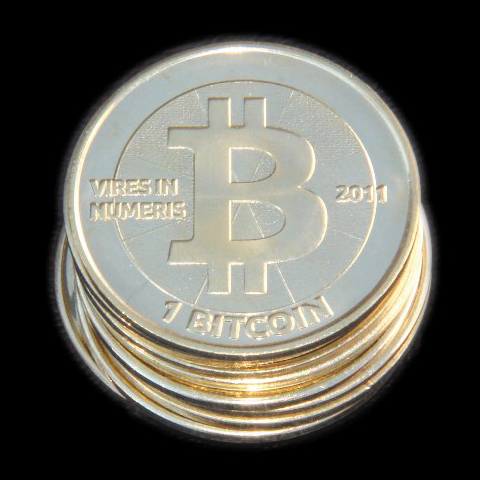
In September 2011, a software engineer in Sandy, Utah named Mike Caldwell began minting brass coins. They were ordered from a Salt Lake City mint that primarily produced car wash tokens. Each coin had a denomination stamped on its face, initially one bitcoin, and a holographic seal on the reverse. Beneath the hologram, embedded in the coin, was a slip of paper printed with the private key to a bitcoin address that had been funded with the corresponding amount. The address itself was lasered onto the coin’s surface so that anyone could verify the balance on the blockchain. Tearing through the hologram exposed the private key. The first person to redeem it claimed the bitcoin. The coin, once peeled, became a souvenir.
Caldwell called the operation Casascius. He produced coins between 2011 and late 2013, in denominations of 0.1, 0.5, 1, 5, 10, 25, 100, and 1,000 BTC, in brass, silver, and gold. By the time he stopped, he had minted roughly twenty-eight thousand funded coins and bars containing more than ninety thousand bitcoin in total. He funded each one personally, sending the BTC to the embedded address from his own wallets, sealing the hologram by hand, and shipping the coins by mail. The trust model was almost preindustrial. Customers had to trust that Caldwell did not retain copies of the keys he had generated, that the holograms were tamper-evident in the way he claimed, and that the coins they received were correctly funded. In more than a decade of subsequent operation, no unpeeled Casascius coin has been documented to have been drained by Caldwell or anyone else with prior access to the keys. The trust held.
The coins did several things at once. They made bitcoin tangible at a moment when most users were still struggling to explain to friends what bitcoin even was. They functioned as cold storage in an era before hardware wallets: the keys were offline, the holograms were tamper-evident, and the coins could be passed hand to hand without any digital trace until redemption. They carried the motto Vires in Numeris, Latin for Strength in Numbers, which Caldwell stamped on the rim, and which became, through repetition on these coins, bitcoin’s unofficial heraldic phrase. Each coin was a piece of cypherpunk craft: a working cryptographic instrument disguised as a numismatic object.
The end came on November 27, 2013, when Caldwell announced he was suspending sales of items containing digital bitcoin. The Financial Crimes Enforcement Network had contacted him to explain that, in the agency’s interpretation, minting physical bitcoins constituted money transmission and required federal and state licensure. Caldwell had no resources to register as a money transmitter. The operation ended that week. He continued producing unfunded commemorative coins for some time afterward, but the era of the working Casascius coin — a physical object that was bitcoin in the way a gold coin was gold — was over after twenty-six months.
The coins outlived their production. Of the approximately twenty-eight thousand funded coins minted, more than seventeen thousand remained unredeemed at the end of 2025, holding roughly forty thousand bitcoin still locked behind their holograms. The market for unpeeled Casascius coins is now a serious numismatic category. Only six 1,000 BTC gold coins were ever minted, and four remain unredeemed. The most famous, purchased in December 2011 for $4,905 and forgotten in a desk drawer, was submitted to PCGS for grading in October 2021, when its bitcoin contents had reached approximately forty-eight million dollars. It is held in an overseas bank vault. The motto on its rim still reads Vires in Numeris. The catalog includes the coins as iconography because they were the first object that made bitcoin physical, and because every subsequent attempt at physical bitcoin, from Lealana to Bitbills to the modern hardware-wallet aesthetic, descends from what Caldwell shipped from his Utah workshop with hand-applied holograms.