 The Bitcoin Annotated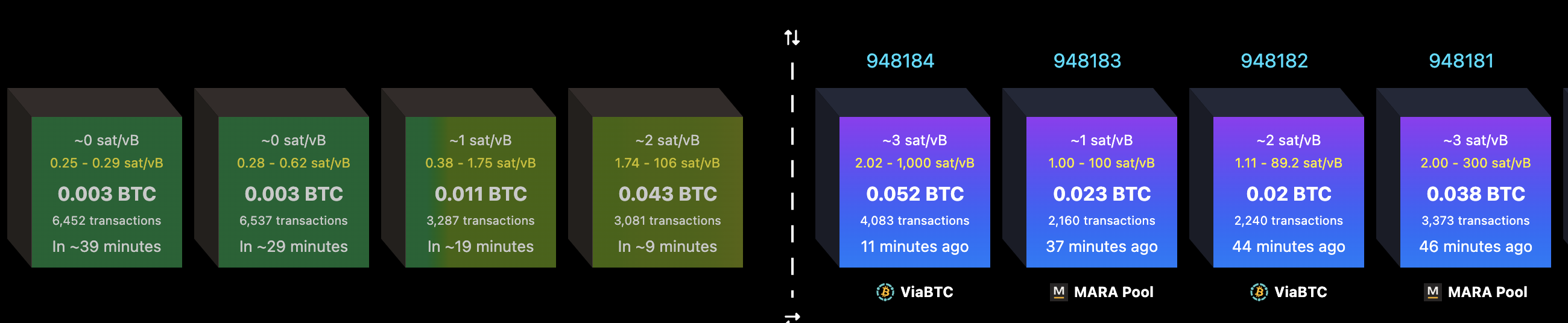
The mempool is bitcoin’s waiting room. Every transaction broadcast to the network sits there before a miner sweeps it into a block. Before mempool.space, this waiting room was abstract: a number on a page, a queue length, a fee estimate from one wallet that disagreed with the fee estimate from the next. After mempool.space, it was a picture. Stacks of candy-bar blocks, green for projected and purple for confirmed, colored by fee tier. A glance told the user what the next ten minutes would cost.
Simon Lapscher (softsimon) began the project as a side endeavor in 2018. The public site at mempool.space went live in early 2020, with co-maintainer Wiz handling much of the infrastructure. The software is open source under MIT license, runs on self-hosted nodes via Umbrel and RaspiBlitz, and is integrated into wallets including Cash App, Phoenix, Muun, and Zeus. The site itself is operated without advertising and without third-party tracking, funded by community sponsorships visible on the site’s About page. The discipline is part of the artifact.
What makes the site canonical is not the data; the data is on every block explorer. What makes it canonical is the visualization grammar. The candy-bar blocks. The fee histogram. The projected-vs-confirmed split. The ephemeral-mempool view that updates in near-real-time. The intentional restraint — no altcoins, no ads, no trackers, no clutter. Every design choice points back to the same editorial position: bitcoin is the only thing here, and the only thing that matters is showing it accurately. The aesthetic became the standard. Block explorers built before mempool.space have largely adopted its conventions. Block explorers built after it have adopted its restraint.
The site occupies a particular role in bitcoiner daily life. It is what one opens to check fees before sending. It is what one checks during a fee spike to see whether a transaction will confirm. It is the visual the bitcoin podcast hosts share their screen on. The phrase “let me check the mempool” almost always means mempool.space, even though “the mempool” is a property of the protocol itself, not a website. Naming has been won. The brand is the protocol-feature.
The catalog includes mempool.space as iconography rather than as a service or document because the artifact is the visualization. The site is bitcoin’s clearest UI. It made the network’s pulse legible to anyone who could read a chart. Bitcoin Orange named the protocol’s color, the ₿ symbol its mark. Mempool.space named its rhythm.