 The Bitcoin Annotated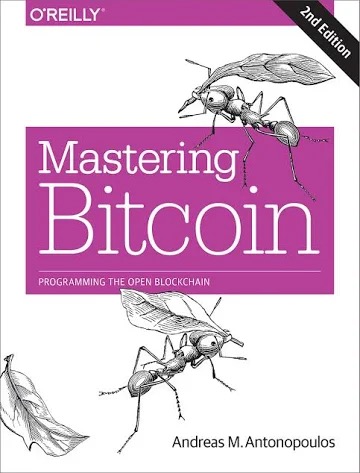
There is a generation of bitcoiners, call it the 2014-to-2017 cohort, who learned the protocol from one man’s books. Mastering Bitcoin taught them how it worked. The Internet of Money taught them why it mattered. The two books were never marketed as a pair. They became one anyway.
Mastering Bitcoin arrived first, published by O’Reilly Media in December 2014 with bugs on the cover and an open license attached. The book’s intended audience was developers — engineers, software architects, people who needed to ship code against the protocol — but its first chapters worked as a primer for anyone willing to sit with the technical details. The second edition (2017) added wallets, scripts, and a serious treatment of segregated witness. The third edition (December 2023), co-authored with David A. Harding, brought the book current through Taproot. All three editions remain freely readable on GitHub under a Creative Commons license; the open licensing was deliberate. Antonopoulos believed the technical reference for an open-source money should not itself be paywalled.
The Internet of Money Volume One arrived in August 2016, self-published through Merkle Bloom LLC. It was something different: a slim collection of edited talks Antonopoulos had been giving since 2013, covering the philosophical, political, and economic dimensions the technical book deliberately did not. Where Mastering Bitcoin answered how, The Internet of Money answered why. The launch ran on a Joe Rogan appearance on September 7, 2016, which carried the book to a non-bitcoin audience that the technical work would never have reached. Two more volumes followed.
The two books sat at opposite ends of the same shelf. New developers were handed Mastering Bitcoin. New skeptics were handed The Internet of Money. Between them, they covered the entire onboarding surface area of a generation. The catalog treats them as a single artifact, the Antonopoulos books, because they functioned as one. The cultural contribution is the pair, not either volume in isolation.
Antonopoulos himself became something rarer than either book deserved on its own merits. He gave more than 150 talks across the years that produced The Internet of Money, refused to monetize a course or a coin, and accepted donations through a public bitcoin address when listeners insisted. The man and the work sat in the same key. The books are what survived the talks; the talks are what produced the books.
Bitcoin culture would be different without the protocol-ancestor papers, without the Whitepaper, without the early forums. It would also be different without Antonopoulos, but it would still be recognizable. He is not a foundational artifact in the catalog’s strict sense. He is the educator the cohort had, in the years it most needed one. The books are the document that proves he was here.