 The Bitcoin Annotated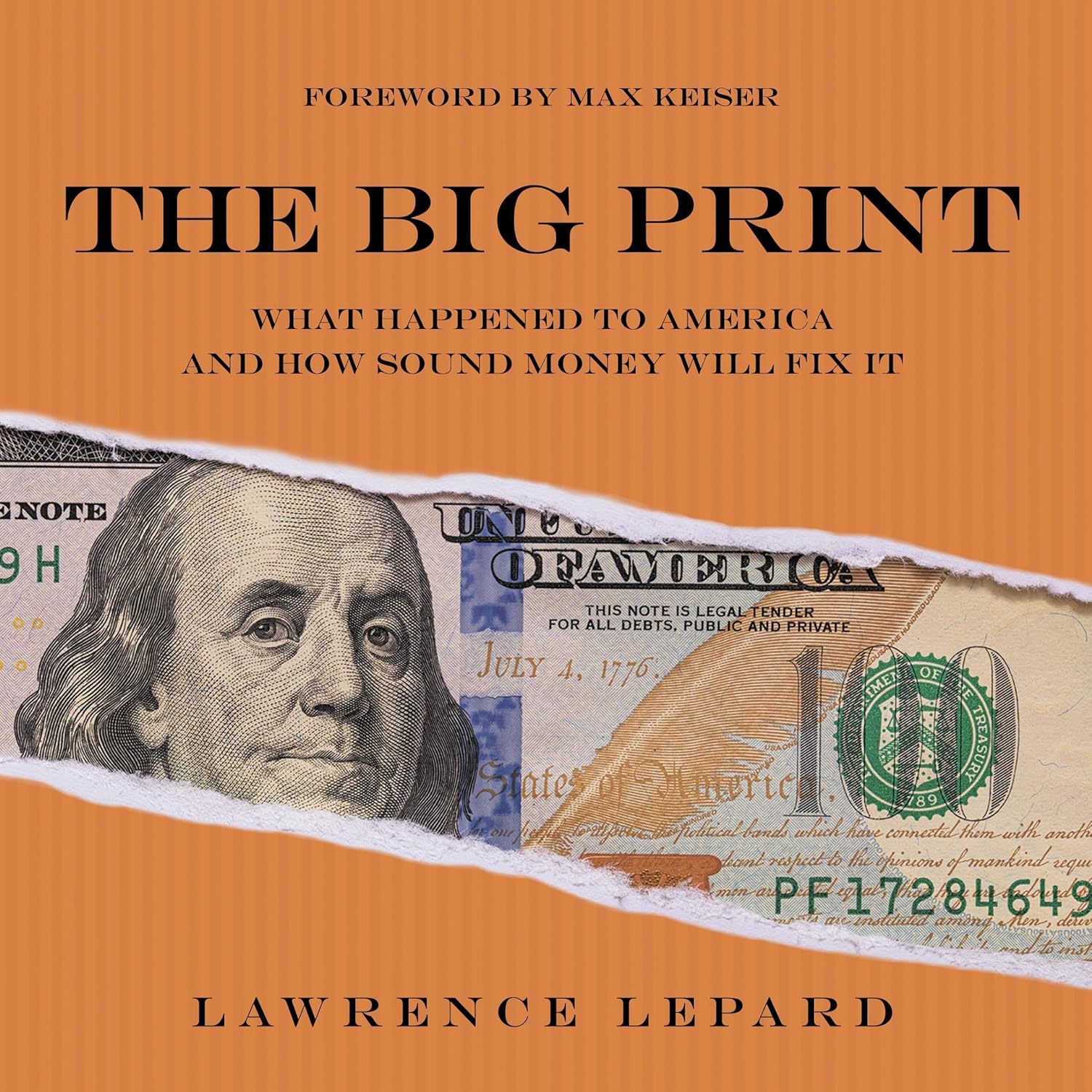
Lawrence Lepard had been making the sound-money case in quarterly investor letters for a decade before he wrote a book. He runs a fund, Equity Management Associates, that holds gold miners and bitcoin, and the letters he sent his limited partners through the 2010s and 2020s read as a long, increasingly alarmed argument that the dollar’s purchasing power was being deliberately eroded and that hard assets were the only durable defense. The book published on February 3, 2025, is the compressed version of that argument, packaged for an audience that is not a fund’s LPs.
The title is doing two jobs. The Big Print is the colloquial name for the post-2020 monetary expansion (the period during which roughly 40 percent of all dollars in circulation were created in eighteen months), and it is also the name for the policy regime Lepard argues we are now permanently in. The book’s structure mirrors the argument. The first half, The Problem, walks through how the United States arrived at a monetary system in which sustained currency debasement is the path of least resistance. The second half, The Solution, makes the case for sound money — gold, and more centrally, bitcoin — as the asset class through which individuals can opt out.
What gives the book its weight is not novelty. The arguments will be familiar to readers of Saifedean Ammous, Lyn Alden, and the broader sound-money canon. What gives it weight is the messenger. Lepard is a Harvard MBA, a career growth-equity investor, and a man who came to bitcoin late and reluctantly through gold. The book is not the manifesto of a crypto-native; it is the testimony of someone who spent forty years inside the system the book indicts and is now trying to explain, plainly, what he watched happen. The voice is closer to a former insider’s confession than to an evangelist’s pitch.
The book’s reception inside bitcoin was warm and immediate — Bitcoin Magazine, Tales from the Crypt, the conference circuit. Outside bitcoin, the reception has been quieter. This is the pattern for sound-money books: they find their audience first among people already convinced, and only later, if at all, leak into the mainstream. The Bitcoin Standard followed the same trajectory and took years to do it. Whether The Big Print graduates from canon-for-the-converted to broader readership is a question for the back half of this decade.
The catalog includes the book not because it is the best of its kind, and not because Lepard is the most original voice in the sound-money tradition, but because it is the document a particular kind of bitcoin convert kept handing to a particular kind of skeptic in 2025. The ones who would not read The Bitcoin Standard. The ones who needed the argument from a man with the same résumé they had. Whether that conversion script works is, again, a question time will answer. The book exists and is being passed around; it is part of the record.