 The Bitcoin Annotated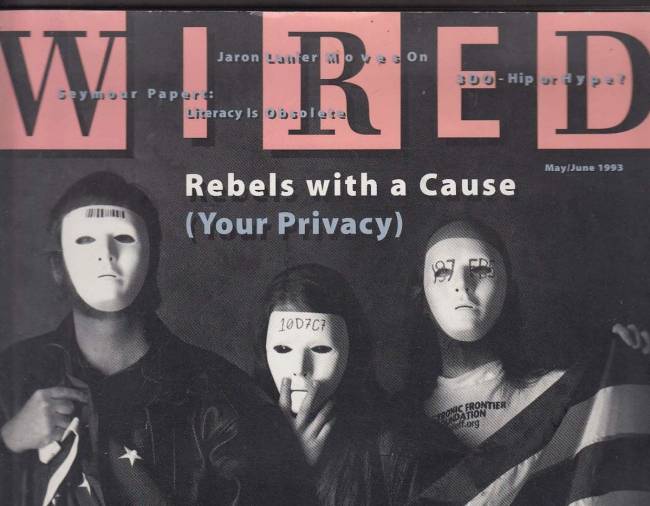
In late 1992, three men met monthly in the San Francisco Bay Area at Cygnus Solutions, John Gilmores company. They were Eric Hughes, a Berkeley-trained mathematician who had worked under David Chaum on early digital cash systems; Tim May, a former Intel engineer and senior scientist who had written The Crypto Anarchist Manifesto in 1988 imagining a world where cryptography would erode the states regulatory capacity; and Gilmore himself, the fifth employee at Sun Microsystems and a co-founder of the Electronic Frontier Foundation. The meetings were informal. The participants were programmers, cryptographers, and what Hughes would later call “code rebels.” A magazine writer named Jude Milhon, attending one of the early gatherings, jokingly called them cypherpunks (cipher plus cyberpunk) and the name stuck.
The mailing list began in September 1992, hosted on Gilmores toad.com server. By 1994 it had seven hundred subscribers. At its peak in the late 1990s, it had over two thousand. The discussion ranged across mathematics, cryptography, computer science, political philosophy, and the practical engineering of privacy tools. The motto was Hughess, from the manifesto he posted in March 1993: Cypherpunks write code. The position underneath the slogan was uncompromising. Privacy could not be granted by governments or corporations. It had to be built, in code, by people willing to release that code into the world regardless of whether the U.S. government, which classified strong encryption as a munition under ITAR until 1996, considered the act legal. Phil Zimmermann was investigated for the international distribution of PGP. The cypherpunks printed PGP source code in books to assert it was protected speech. The era was the crypto wars, and the mailing list was its general headquarters.
Almost every idea bitcoin would later combine was first circulated on the list. Adam Back posted Hashcash in 1997. Wei Dai posted b-money in 1998. Nick Szabo developed Bit Gold in conversations that ran across the list and adjacent forums between 1998 and 2005. Hal Finney, the cryptographer who would receive the first non-self bitcoin transaction from Satoshi in January 2009, was a longtime list participant and the principal author of PGP 2.0. The technical architecture of bitcoin is not original to Satoshi in the sense of being invented from nothing. It is original in the sense of being the first working synthesis of components that the cypherpunks had been individually proposing, debating, and refining for sixteen years.
The lists roster reads, in retrospect, like a founding committee that did not know it was founding anything. Hughes, May, Gilmore, Finney, Back, Dai, Szabo, Zimmermann, Julian Assange, Bram Cohen who would later build BitTorrent, Jacob Appelbaum, and a number of pseudonymous participants whose identities have never been resolved. Some of those pseudonymous identities, in the years since, have been speculated upon as candidate Satoshis. The speculation is appropriate. It is also unresolvable. What is resolvable is that whoever Satoshi was, they were reading this list. The Whitepapers design is a response to problems the list had been articulating for a decade. The first message Satoshi sent to announce bitcoin in October 2008 went to the cryptography mailing list, a successor forum to the original, populated by many of the same people.
The catalog treats the list itself as a discrete artifact rather than as a backdrop for the documents it produced. The Manifesto, Hashcash, b-money, and Bit Gold are foundational entries in their own right. But the connective tissue — the forum where these ideas were drafted, criticized, refined, and absorbed into a shared technical vocabulary — is itself the precondition for any of them existing in the form they did. Bitcoin is the cypherpunks working solution to a problem the cypherpunks had spent sixteen years specifying. The mailing list is where the specification got written.