 The Bitcoin Annotated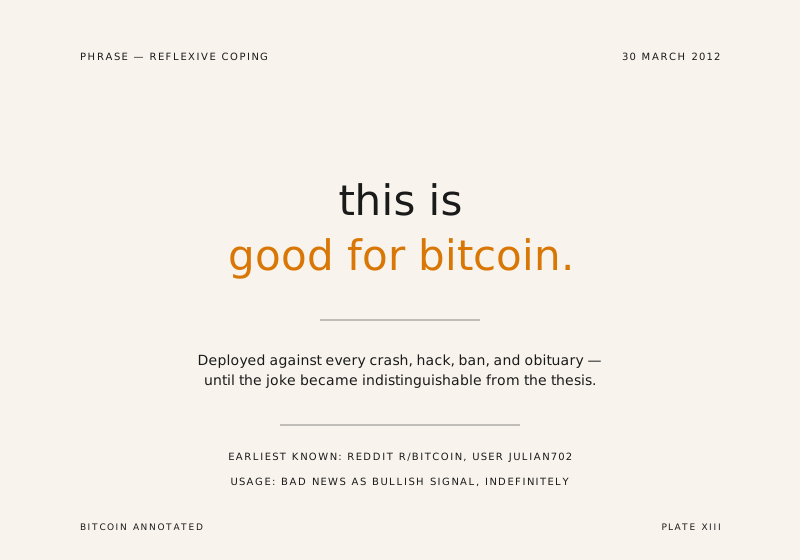
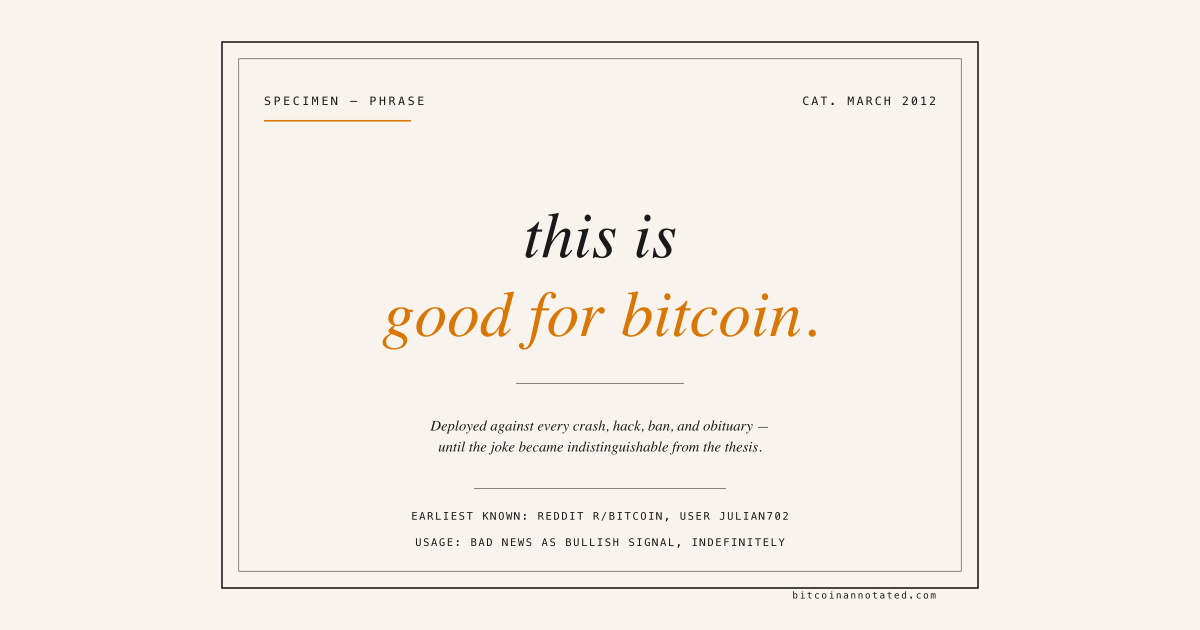
The earliest known online use of the phrase appeared on March 30, 2012, in a comment by the Redditor Julian702 in r/bitcoin. The comment is sincere. He is making an argument about adult-content payments expanding bitcoin’s user base beyond its early audience of cryptographers and libertarians. The construction is plain: this is good for bitcoin because. There is a clause that follows. The phrase has not yet detached from its reasons.
The detachment took about three years. By 2015 the phrase was being used in r/bitcoin sarcastically — applied to exchange hacks, regulatory crackdowns, celebrity criticism, price crashes, and any other negative news. The meaning had inverted. It no longer described why something was good for bitcoin. It now described the act of pretending that anything is good for bitcoin. The phrase was both the cope and the acknowledgment of the cope.
By 2017 the meaning had inverted again. Bitcoiners had used “this is good for bitcoin” sarcastically for so long, and so often, and through so many cycles in which the negative news did in fact precede price recovery, that the sarcasm became uncertain. A China mining ban: this is good for bitcoin. An exchange collapse: this is good for bitcoin. A Nobel laureate calling it worthless: this is good for bitcoin. The recoveries kept coming. The phrase, deployed sarcastically, kept turning out to be literally correct. Sarcasm and sincerity collapsed into each other.
This is the most honest thing the phrase does. It records the bitcoiner’s actual epistemic position, which is that they cannot tell, in any given week, whether they are coping or seeing clearly, and that the market refuses to clarify which it is. The phrase is a compressed acknowledgment of being long an asset that responds unpredictably to its own bad news, by people who have learned to stop trying to predict.
There is no good way to draw the line between irony and faith here. The phrase doesn’t try. It just absorbs the next headline and continues.