 The Bitcoin Annotated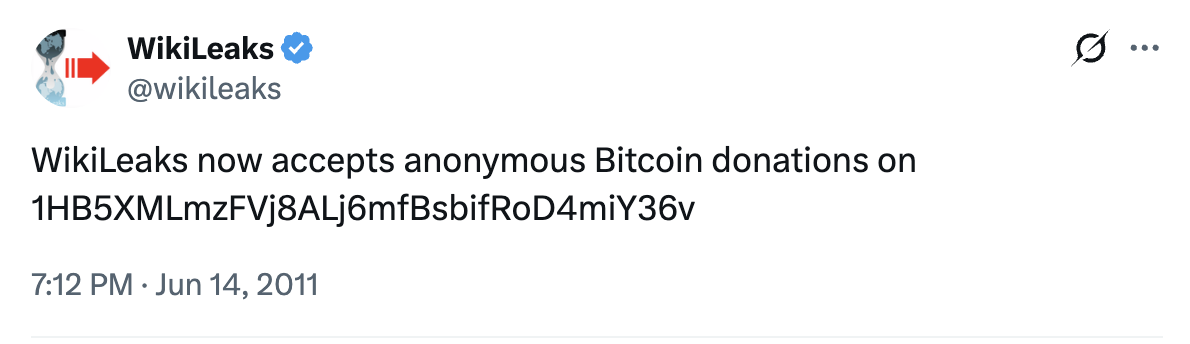
In late 2010, after the publication of the Cablegate diplomatic cables, the United States government leaned on the global payments infrastructure to choke off WikiLeaks. Visa, Mastercard, PayPal, Western Union, and Bank of America stopped processing donations within days of one another. There was no court order. There was no formal sanction. The companies simply stopped, and WikiLeaks lost its ability to receive money. The organization began running on cash reserves and was, by its own account, months from operational collapse.
On June 14, 2011, at 4:12 PM, the WikiLeaks Twitter account posted six words and a string of letters: WikiLeaks now accepts anonymous Bitcoin donations on 1HB5XMLmzFVj8ALj6mfBsbifRoD4miY36v. Bitcoin was less than two and a half years old. It had no major exchange that resembled a modern one. It traded for under twenty dollars. The address belonged to a wallet that had received nothing. By the end of that first week it had received 171 BTC. By the time Julian Assange entered the Ecuadorian embassy a year later, it had received over three thousand.
The mechanism mattered more than the amount. Visa could not refuse a bitcoin transaction, and neither could Mastercard. PayPal had no jurisdiction over the network. The blockade that had been imposed without process could not be enforced against a payment system that had no enforcement layer. For the first time, the Whitepapers most contested claim, that bitcoin would route around censorship, had been demonstrated against a real adversary, in real time. The thing the protocol had been designed for had happened.
Satoshi Nakamoto had not approved. The question of whether bitcoin should accept WikiLeaks money had been live for six months before WikiLeaks actually moved. In December 2010, after a PCWorld article speculated about the possibility, Satoshi posted a public warning on the BitcoinTalk forum: “It would have been nice to get this attention in any other context. WikiLeaks has kicked the hornets nest, and the swarm is headed towards us.” The post was December 11, 2010. The next day, Satoshi posted once more — about denial-of-service controls and a software build — and then went silent and has not been heard from since. WikiLeaks did not accept bitcoin until June 2011, six months after Satoshis disappearance. Assange has since written that the team had considered moving sooner but had honored the warning, waiting until the protocol had grown enough that the heat would not destroy it.
The catalog includes this event not as a chapter in the WikiLeaks story but as a load-bearing moment in bitcoins. The protocol claimed it would be censorship-resistant. WikiLeaks needed it to be. By June 2011, the blockade was a fact and the donations were arriving. Every later argument for bitcoin as protest infrastructure descends from this. The creator had been gone six months. The protocol worked without him.